






Yoko Ono has spent more than seven decades making art that refuses to behave like an object. Her work often begins with something almost ridiculously simple – an instruction, a door, a photograph, a blank surface – and then leaves the difficult part to us. Yoko Ono: Insound and Instructure, now at Istanbul’s Sakıp Sabancı Museum brings together 67 works from across her career, showing an artist far more interested in what happens between people, ideas, and objects than in producing something simply beautiful to look at. It is an exhibition about participation, memory, violence, love, and imagination. But, more importantly, it is an exhibition that keeps asking, “What exactly are we doing here as viewers?”
Beyond Lennon’s Story
Born in Tokyo in 1933, Ono moved between Japan, New York, and London during the formative years of her career, becoming closely associated with the experimental avant-garde and Fluxus circles of the 1960s. Long before she became globally known as John Lennon’s partner, she was already developing instruction-based works that challenged the traditional relationship between artist and audience. Her 1964 book Grapefruit collected hundreds of these instructions, many of which could exist only in the imagination. Her work expanded into performance, film, music, installation, and activism, while peace and social engagement became increasingly important parts of her practice. The Lennon connection, of course, became almost impossible to separate from her public image. For years, Ono was treated less as an artist and more as a character in somebody else’s story. Walking through this exhibition makes that old narrative feel increasingly inadequate.
Insound and Instructure is not particularly interested in giving you the comfortable experience of walking from one framed masterpiece to another. The exhibition moves through more than seventy years of Ono’s practice, from early conceptual and instruction pieces to large installations and participatory works. The title itself comes from two terms Ono introduced in 1964, reflecting her interest in what exists inside us and what happens when ideas take physical form.
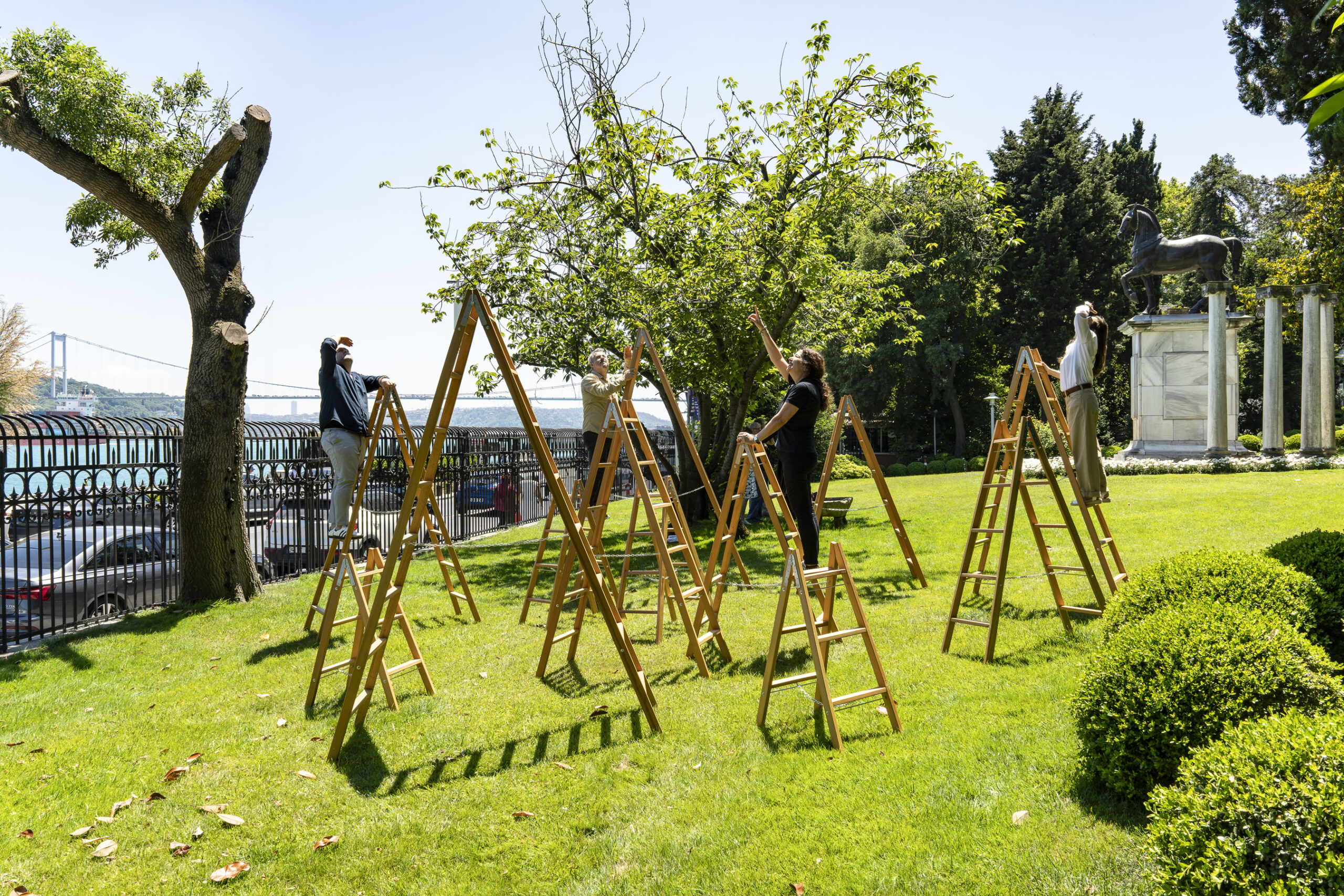
At Sakıp Sabancı Museum, this becomes especially intriguing because the exhibition does not stay neatly inside the gallery. Works extend through different spaces of the museum and into the garden, creating a relationship between Ono’s deliberately open-ended practice and the much more formal architecture of the institution. Some works demand attention. Others barely seem to ask for it. A few simply sit there, waiting for you to decide whether you are willing to play along or not.
The Works That Stay With You
One of the most difficult works to simply “look at” is Arising (2013). Ono invited women who have experienced violence to contribute a written testimony accompanied by a photograph showing only their eyes. The result is not a collection of portraits in the traditional sense. Instead, the work builds a fragmented archive of people who have experienced something that is often deliberately hidden.
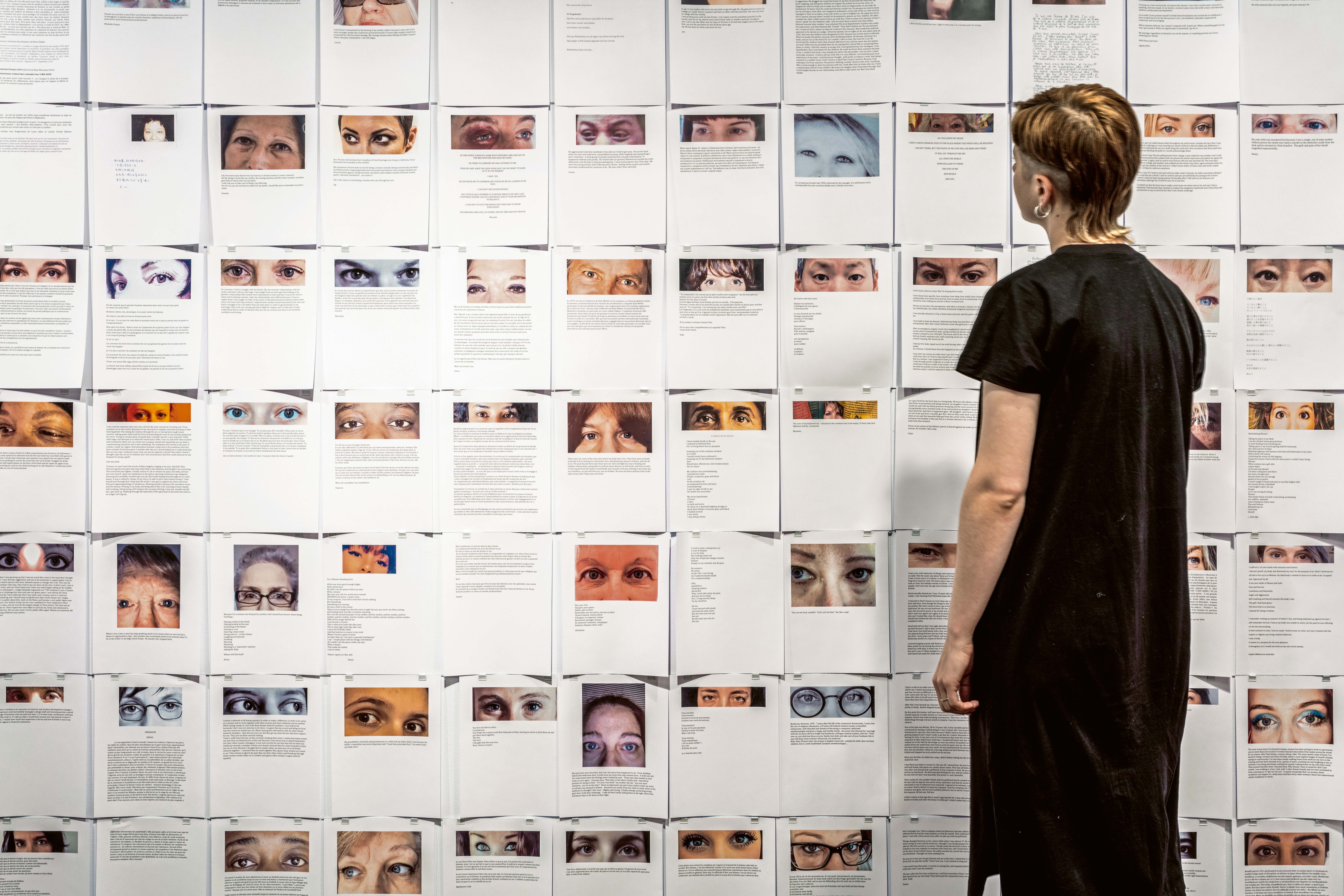
The eyes are particularly important. They give the women an unmistakable presence without giving the viewer the full comfort of a face. You are allowed to look, but not to consume the person behind the image. The written testimonies make the distance even more uncomfortable. There is no dramatic soundtrack telling you how to react. There is simply evidence of experiences that usually disappear into statistics, private rooms, or polite silence. And the work is still being made. For the Istanbul presentation, women from anywhere in the world are invited to contribute to Arising. This changes the piece from a historical artwork into something that continues to accumulate. The museum is not simply displaying the work. It is providing the conditions for it to keep happening.
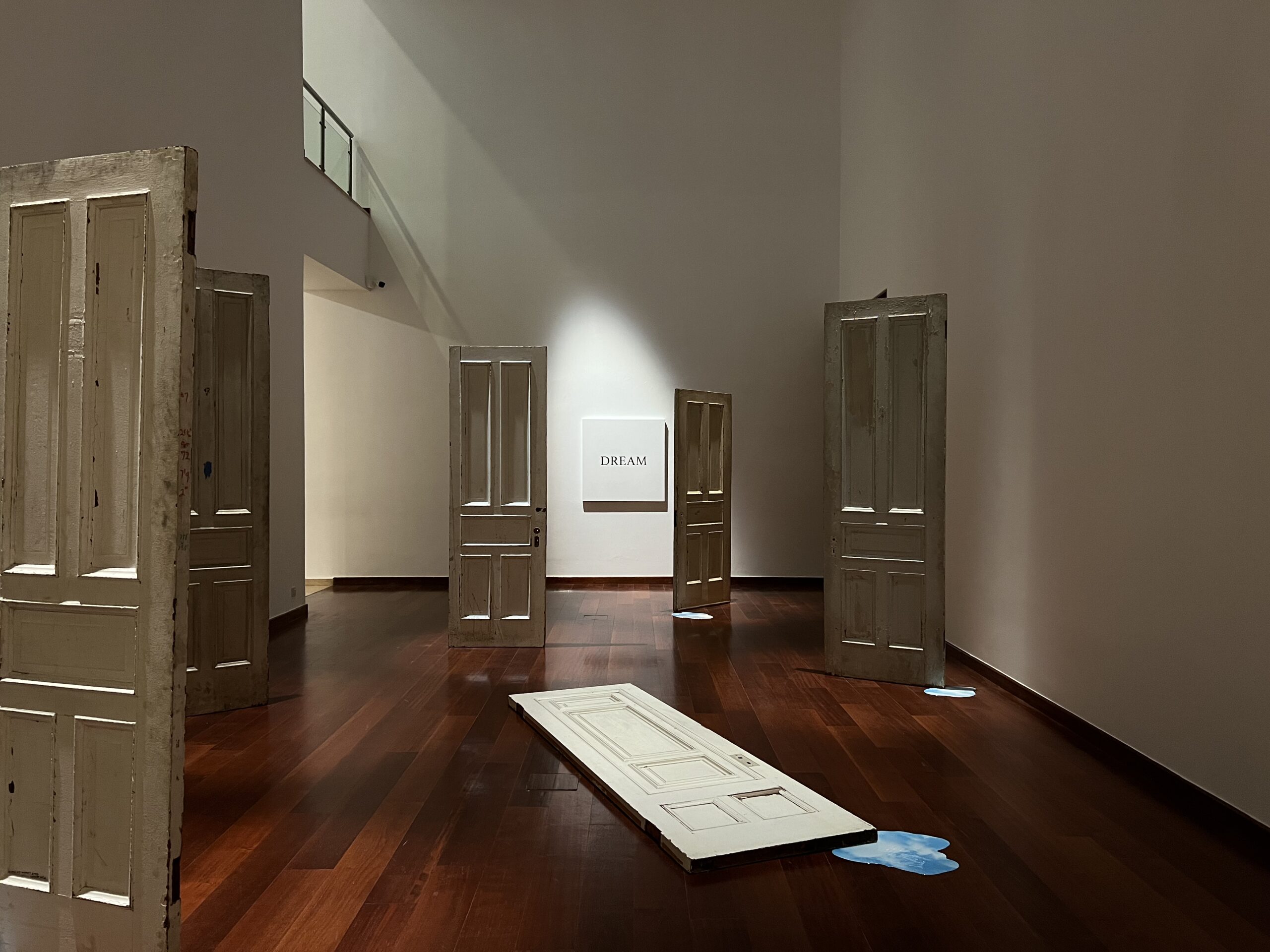
Then there is Doors (2011), a much quieter work consisting of nine found wooden doors. It is almost absurdly ordinary at first glance. Doors are everywhere. We barely notice them until they prevent us from entering somewhere. Ono turns that familiarity into a question. A door usually promises another space, but these doors lead nowhere. They have been removed from their practical function and placed in the museum as objects that suggest absence, separation and possibility at the same time. Standing among them feels strangely like being presented with several decisions that cannot actually be made. Which one do you open? Where would it lead? Why do you want to open it in the first place?
It is a very Ono move: take an everyday object, remove its obvious purpose and make the viewer supply the missing part.
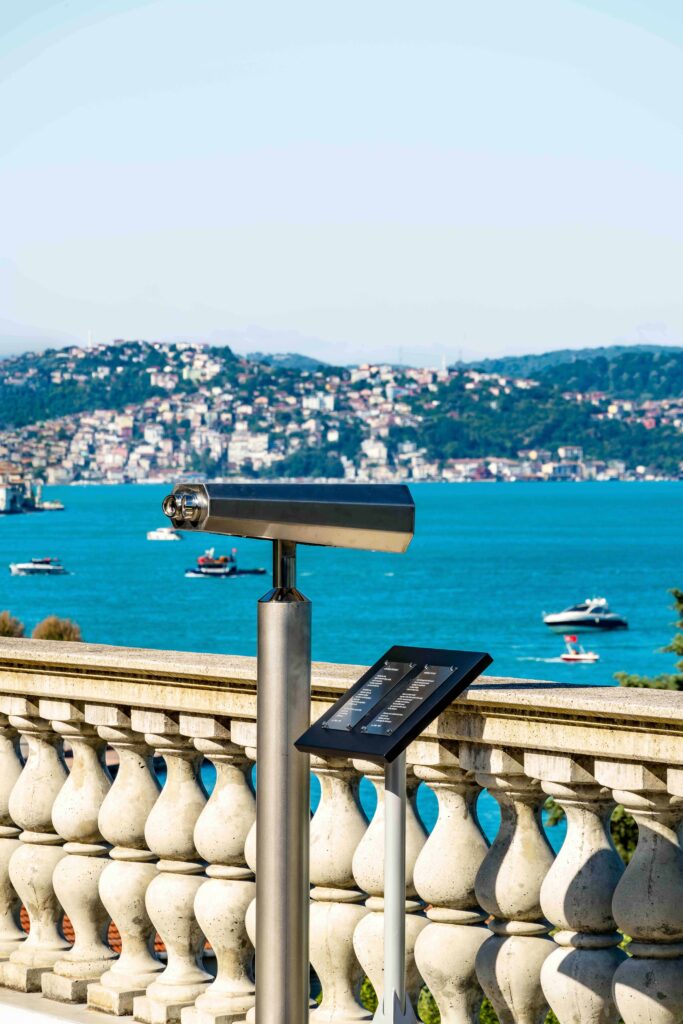
Invisible People (2009–2017) pushes this idea in a more unsettling direction. The work deals with people who are physically present but socially unseen. In a museum, where visibility is usually the entire point, the title becomes almost accusatory. We spend hours looking at things that have been formally declared worthy of our attention, while entire groups of people, such as immigrants, can remain outside that frame.
Ono does not need to produce a huge political statement to make the point. The word “invisible” is enough. It forces you to think about who gets noticed, who gets remembered, and who gets reduced to background noise.
Perhaps the most emotionally straightforward work in the exhibition is My Mommy Is Beautiful (2004). Visitors are invited to write a memory or thought about their mothers or attach a photograph to the canvases. Over time, the blank surface disappears beneath other people’s memories.
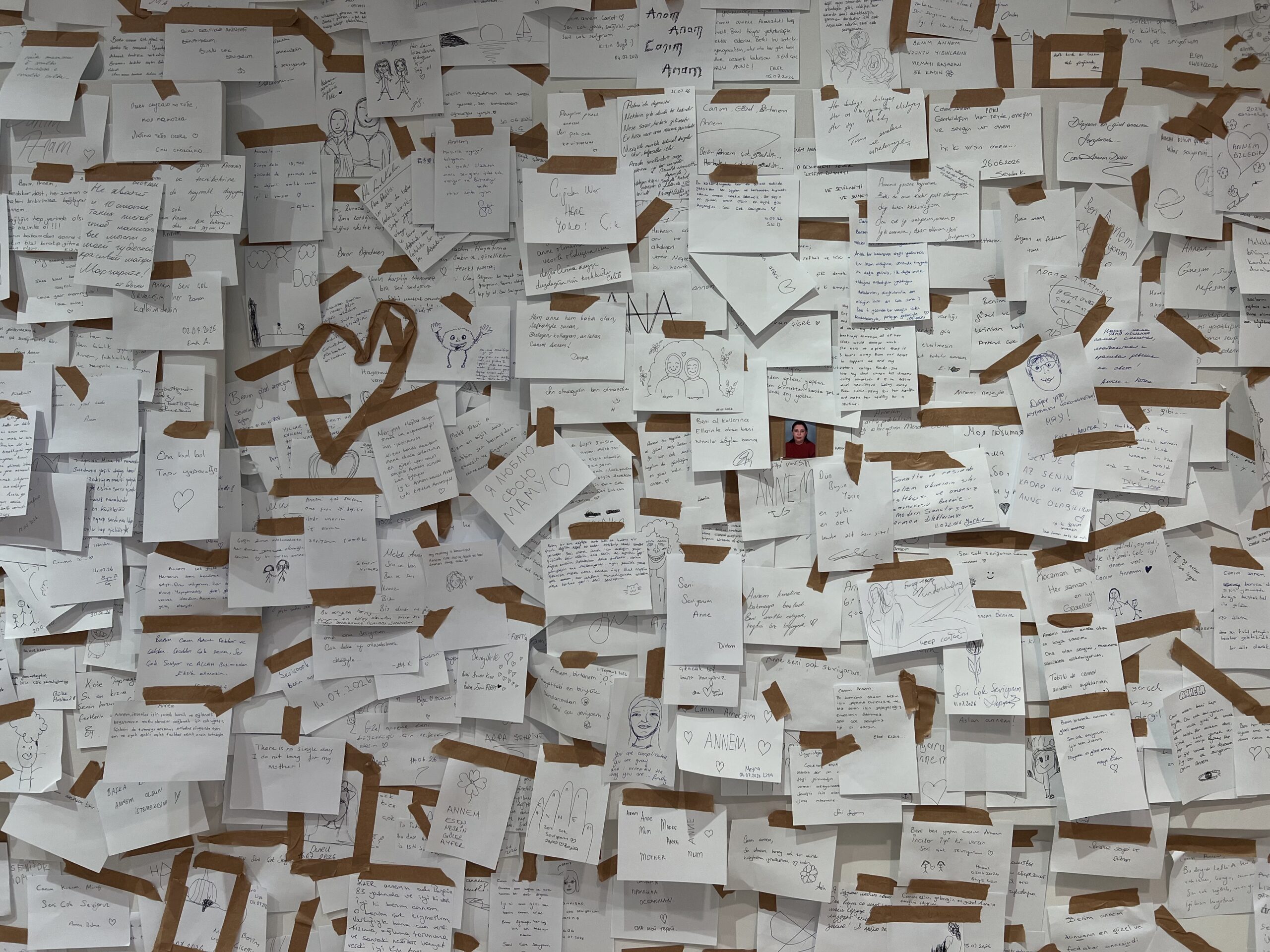
It could easily become sentimental. In lesser hands, it probably would. But Ono’s strength is that she understands how participation changes the meaning of an artwork. Once visitors begin adding their own mothers, the piece stops being entirely hers. It becomes a strange collective wall of private histories: some probably funny, some painful, some embarrassingly ordinary. And that ordinariness is precisely what imparts weight to it.
Still Waiting for an Answer
Frankly, this is what makes Insound and Instructure work. Ono does not always give the viewer something impressive to photograph. One moment she assigns you a task. The next, she poses an uncomfortable question, or points you toward a door that goes nowhere. There are certainly moments when the exhibition can feel overly earnest. Ono’s belief in peace, love, empathy, and collective imagination is not exactly subtle. But perhaps subtlety was never the point. Her work has always been built around the slightly unreasonable belief that an idea can become an action if someone is willing to take it seriously.
In Istanbul, that idea remains surprisingly effective. More than a retrospective, this exhibition is like a series of small provocations scattered through a museum. You can walk past them and remain a spectator. Or you can participate.
Yoko Ono has been asking us to choose for more than sixty years. Apparently, she is still waiting for an answer.
The exhibition will run till December 27th, 2026. For more details, be sure to visit the official exhibition page.
Featured image: Yoko Ono with En Trance, 1990. Photo by Bjarke Ørsted (© Yoko Ono)


