







Istanbul’s air quality is showing signs of improvement, with particulate matter pollution falling 7% in July 2026 compared with the same month last year. However, the decline is not uniform across the city: pollution increased at 9 of the 26 monitoring stations, indicating that while Istanbul has made some progress since the severe air pollution of the 1990s, achieving cleaner air remains an uneven and ongoing challenge. The latest figures were reported by Daily Sabah.
According to a study by Istanbul Technical University (ITÜ), the citywide average concentration of PM10 – airborne particles measuring 10 micrometers or less in diameter has fallen from 32.04 micrograms per cubic meter in July 2025 to 29.77 micrograms in July 2026. The study, conducted by Prof. Hüseyin Toros of ITÜ’s Faculty of Aeronautics and Astronautics, examined data from 26 monitoring stations operated by the Ministry of Environment, Urbanization, and Climate Change and Istanbul Metropolitan Municipality.
The numbers, however, vary considerably depending on where you are in the city.
Sultangazi 3 recorded the highest PM10 concentration at 56.66 micrograms per cubic meter, followed by Kağıthane 1 at 55.31 and Sultangazi 2 at 51.41. Meanwhile, Kandilli 1 recorded the lowest level at 14.14 micrograms, followed by Üsküdar 1 at 15.75 and Ümraniye 1 at 16.15. PM10 levels decreased at 17 stations but increased at nine. Sarıyer recorded the sharpest increase, with pollution rising 76.37% year on year, while Kumköy saw an increase of 64.51%. On the other hand, Ümraniye 1 recorded the largest decline, at 46.76%, followed by Üsküdar 1 and Yenibosna.
Toros said the overall decline was encouraging but warned that increases at individual stations demonstrate that localized sources of pollution remain. He pointed to several possible reasons for the improvement, including reduced transportation emissions, stronger environmental practices in industry, improved fuel quality, and meteorological conditions.
But Istanbul’s relationship with air pollution has changed dramatically over the past few decades.
In a 2014 report, Anadolu Agency described how the city had once been associated with some of the most alarming pollution headlines in Turkey. Newspapers in the 1990s ran warnings such as “Don’t Let Your Kids Go Outside,” “Mass Death Danger in Istanbul,” and “Living in Istanbul Decreases Lifetime by Four Years.”
At the time, coal was widely used to heat homes, producing severe pollution, particularly during the winter. The introduction of natural gas in 1992 became one of the biggest turning points in Istanbul’s environmental history. As households moved away from coal, sulfur dioxide levels began to fall sharply. According to an Istanbul Metropolitan Municipality report cited in the 2014 by AA, sulfur dioxide concentrations reached 219 micrograms per cubic meter in 1992. After 1997, the levels dropped significantly, and the municipality reported that concentrations had fallen to the required level by 2004.
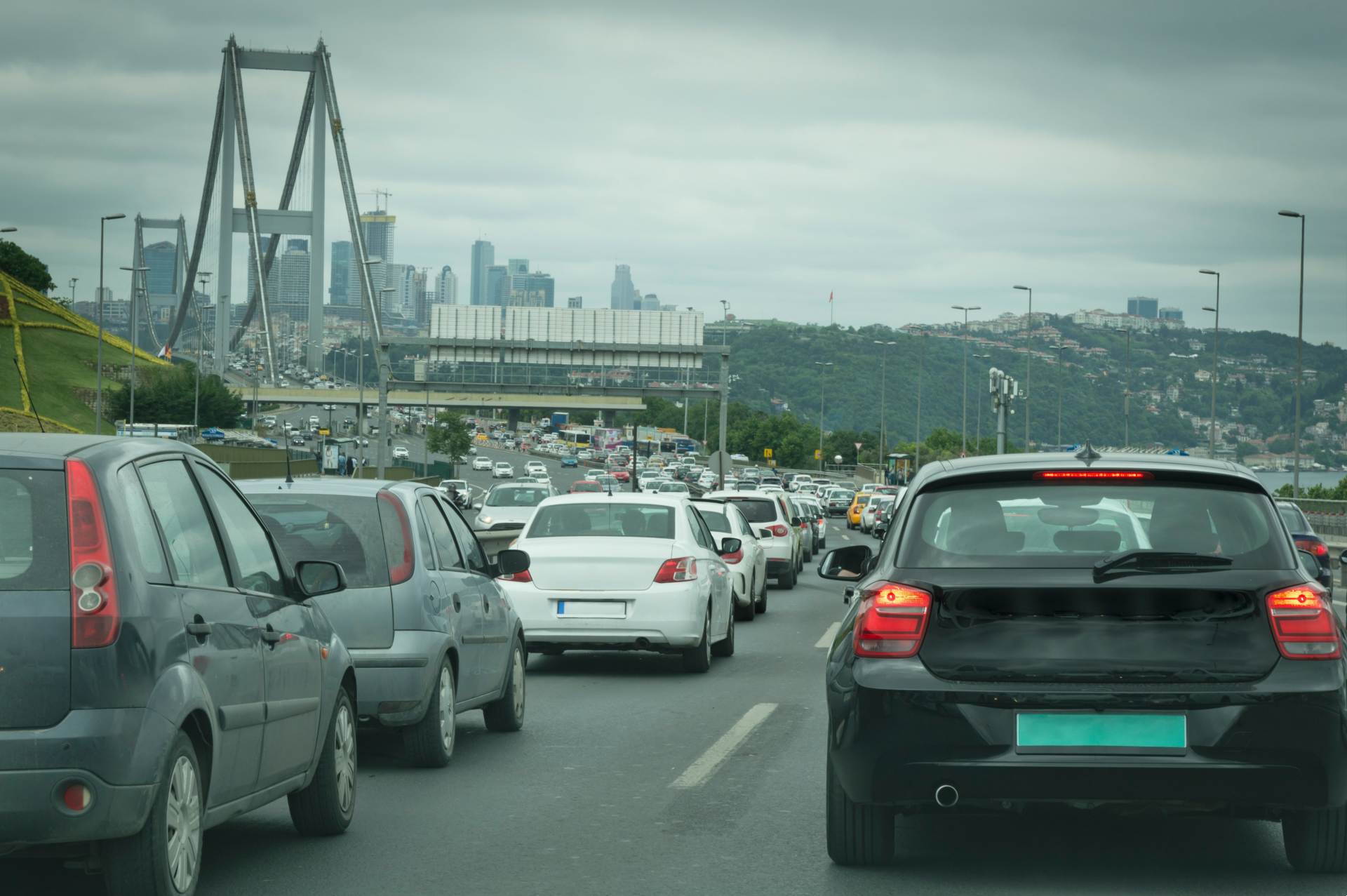
Transportation also played a role in the transformation. Environmentally friendly buses began operating in 1998, while the first Metrobus route between Avcılar and Topkapı opened in 2007, helping reduce car use and emissions. The improvement is particularly striking given Istanbul’s rapid growth. Its population rose from around 6 million to 15 million in roughly 25 years, yet air quality improved. The Bosporus has also helped, acting as a natural ventilation corridor that carries polluted air away with northern winds. But urban development can work against this improvement: experts have warned that high-rise buildings, particularly in Levent, can obstruct airflow.
Cleaner air has never meant pollution disappeared. In 2014, experts warned that high natural gas prices could push some lower-income households back toward coal, particularly during winter when pollution tends to rise. More than a decade later, the concern remains relevant. Istanbul’s average PM10 levels may be falling, but sharp differences between monitoring stations show that air quality is not the same across the city.
Istanbul’s transformation is therefore ongoing. Natural gas, cleaner transportation and better fuel standards have helped, but traffic, urban development, energy costs and localised pollution continue to shape the air residents breathe.
The headlines may have changed since the 1990s. But the latest figures suggest Istanbul still has work to do.